What the EU AI Act Means for Trade and Logistics Operations
What the EU AI Act Means for Trade and Logistics Operations
What the EU AI Act Means for Trade and Logistics Operations
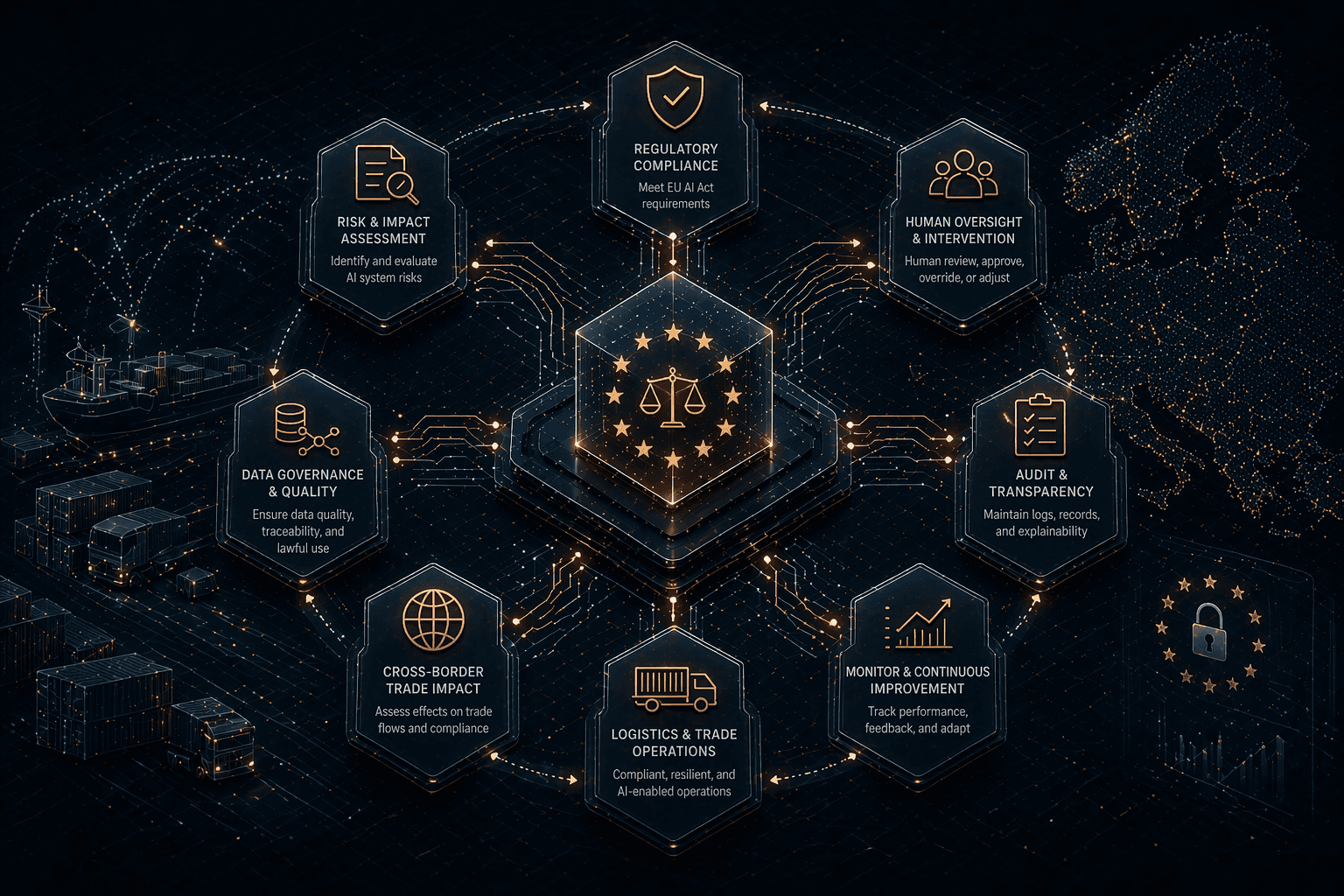
As AI becomes more embedded in trade, logistics, and compliance workflows, the question is no longer whether enterprises will use it, but how they will govern it. The EU AI Act is accelerating that shift by raising expectations around accountability, oversight, and control in AI-enabled operational environments as the framework moves toward full applicability in August 2026. For companies operating across borders, the implications extend beyond legal review. They affect how systems are designed, how decisions are traced, and how execution is governed in practice.
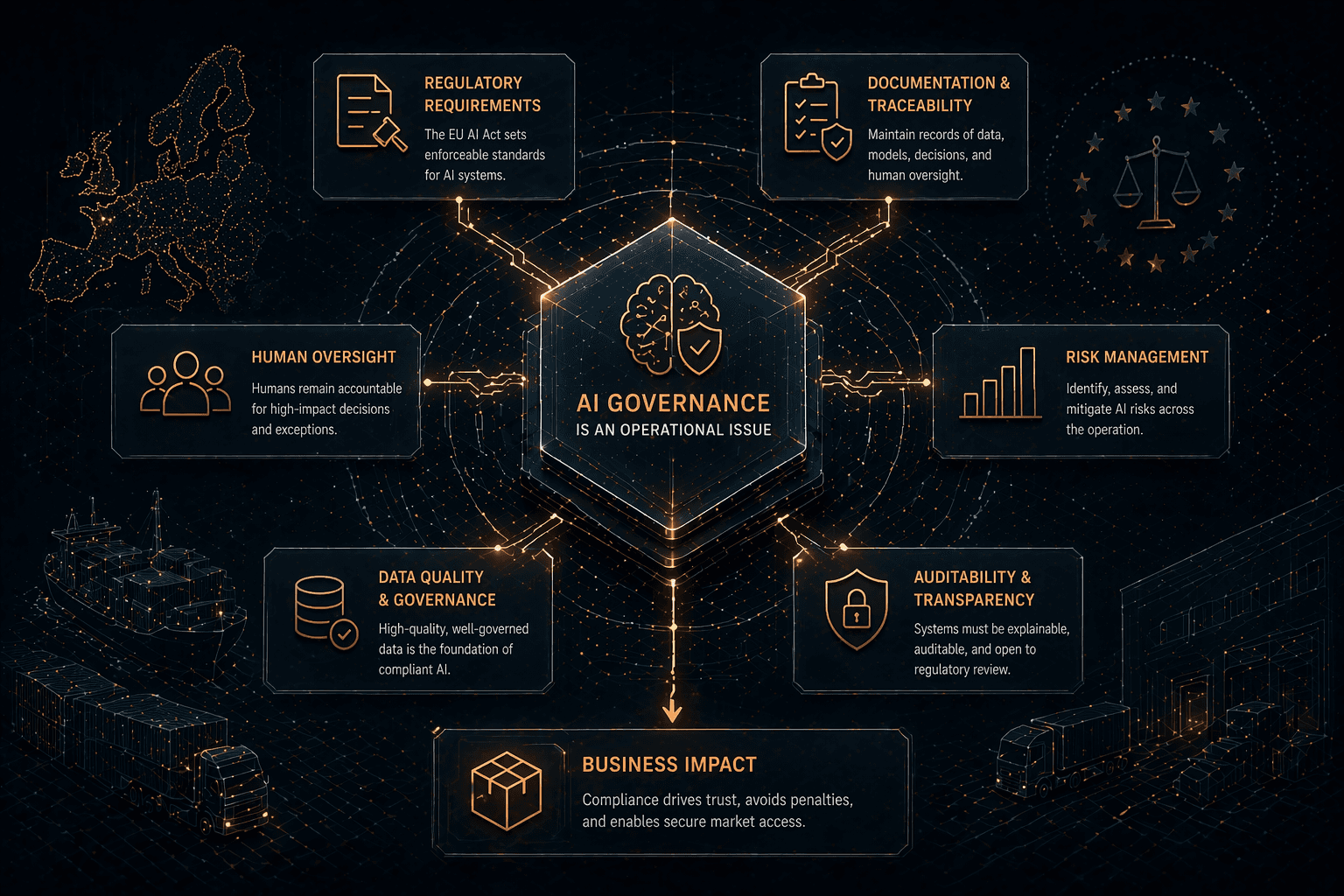
AI governance is becoming an operational issue
In trade and logistics, AI is increasingly used to support classification, routing, exception handling, document processing, visibility, and decision support. In these environments, speed matters, but speed without control creates risk. Enterprises need confidence that AI-assisted workflows can be understood, constrained, reviewed, and verified when operational stakes are high.
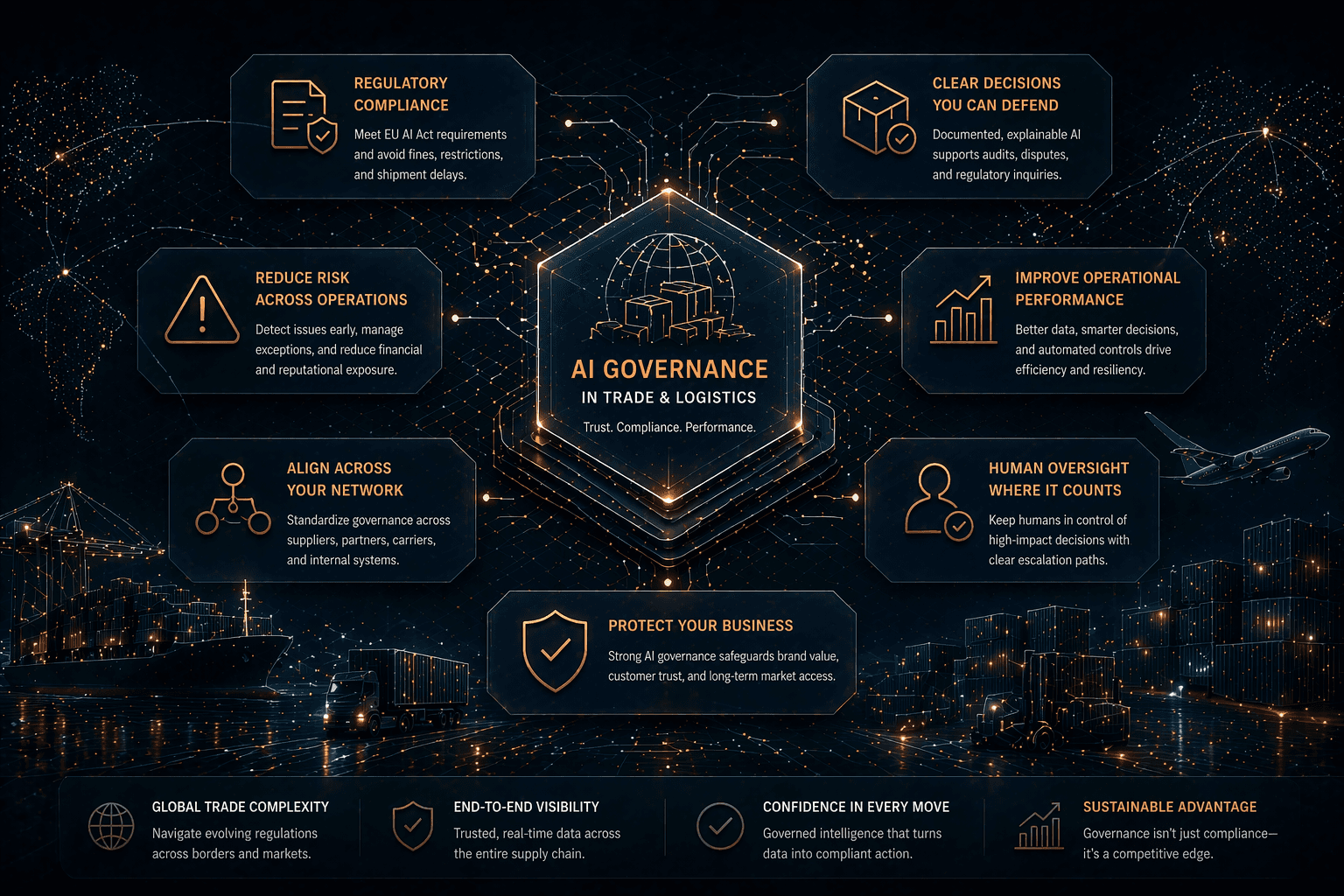
Why this matters for trade and logistics teams
Cross-border and logistics operations already sit close to risk-sensitive functions: compliance, documentation, landed cost, shipment movement, fulfillment, partner coordination, and audit exposure. As scrutiny on AI governance increases, enterprises will need systems that do more than automate. They will need systems that support policy-aware execution, traceable decisions, audit-relevant records, and human oversight where it matters most.
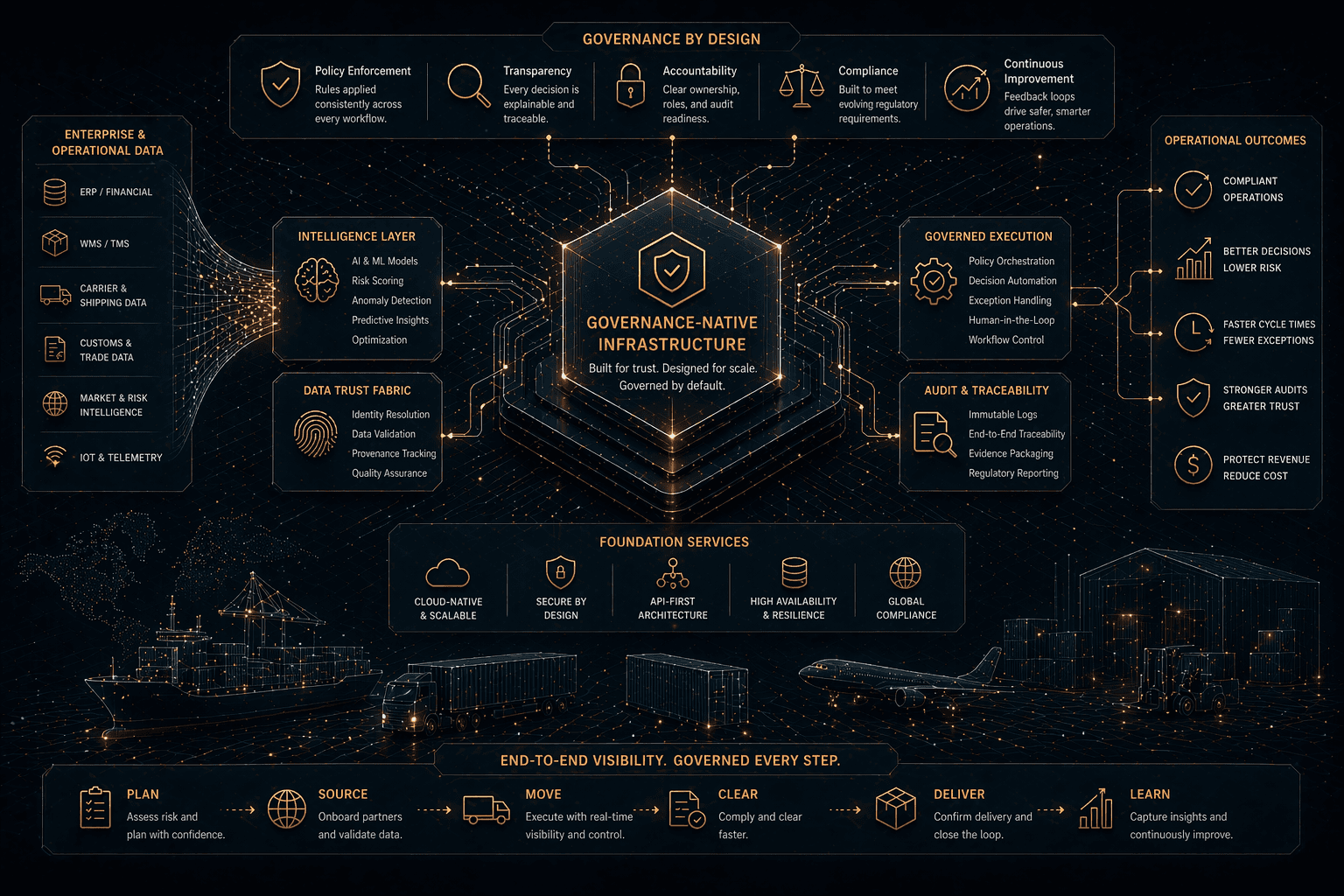
What governance-native infrastructure looks like
Governance-native AI infrastructure is not defined by marketing claims. It is defined by operating characteristics. That includes the ability to apply rules and policies to workflows, preserve decision provenance, retain operational evidence, support review and intervention, and keep execution aligned with business and compliance boundaries.
Where DistroLogic® fits
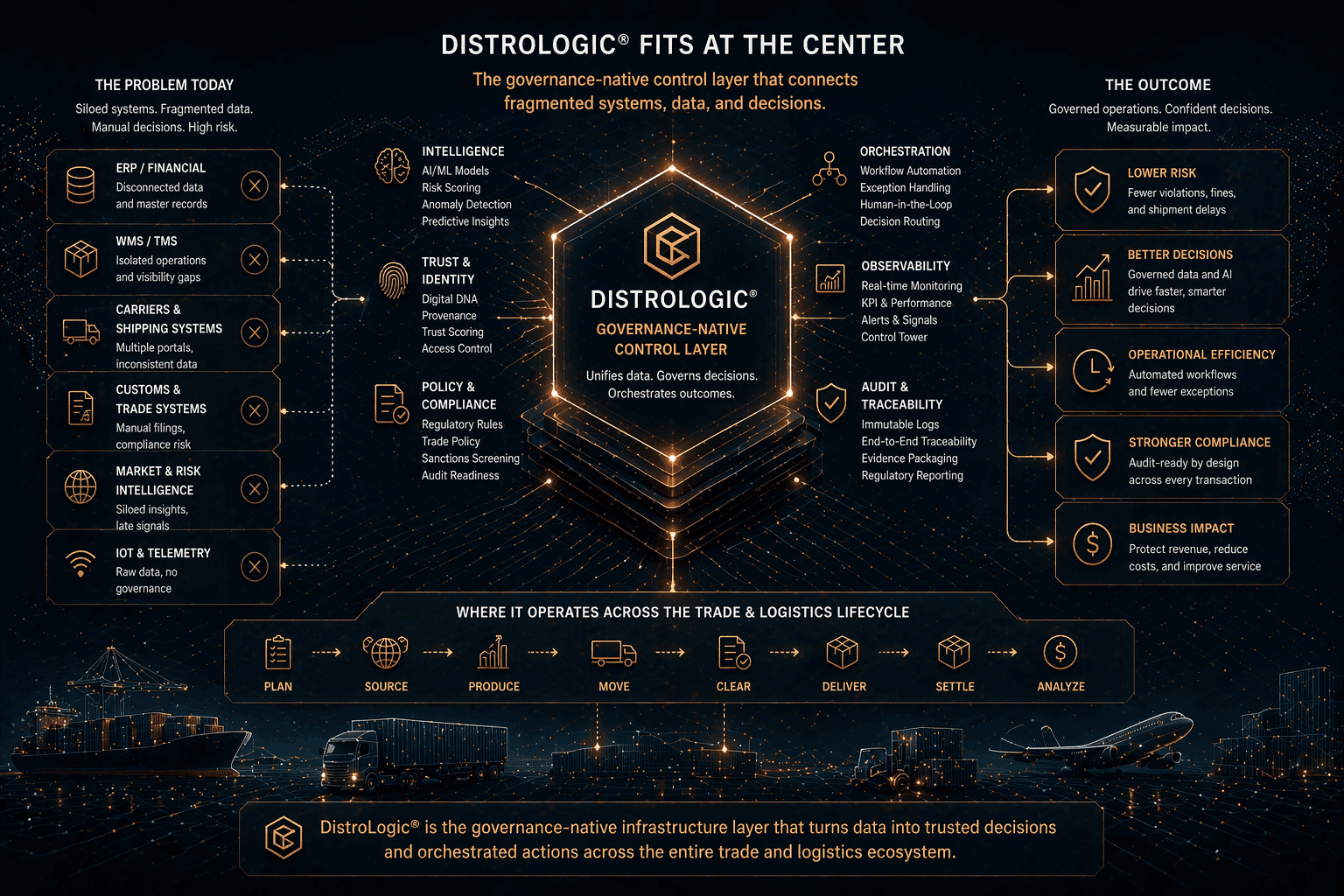
DistroLogic® is built around governed execution in trade and logistics environments. Its architecture emphasizes policy-aware decisioning, audit-grade traceability, verification, and human-directed operational control across cross-border, fulfillment, and compliance workflows. Rather than treating governance as an afterthought, DistroLogic® is structured to support explainable, auditable, and operationally accountable execution from the start.
Preparing for a higher standard of AI accountability
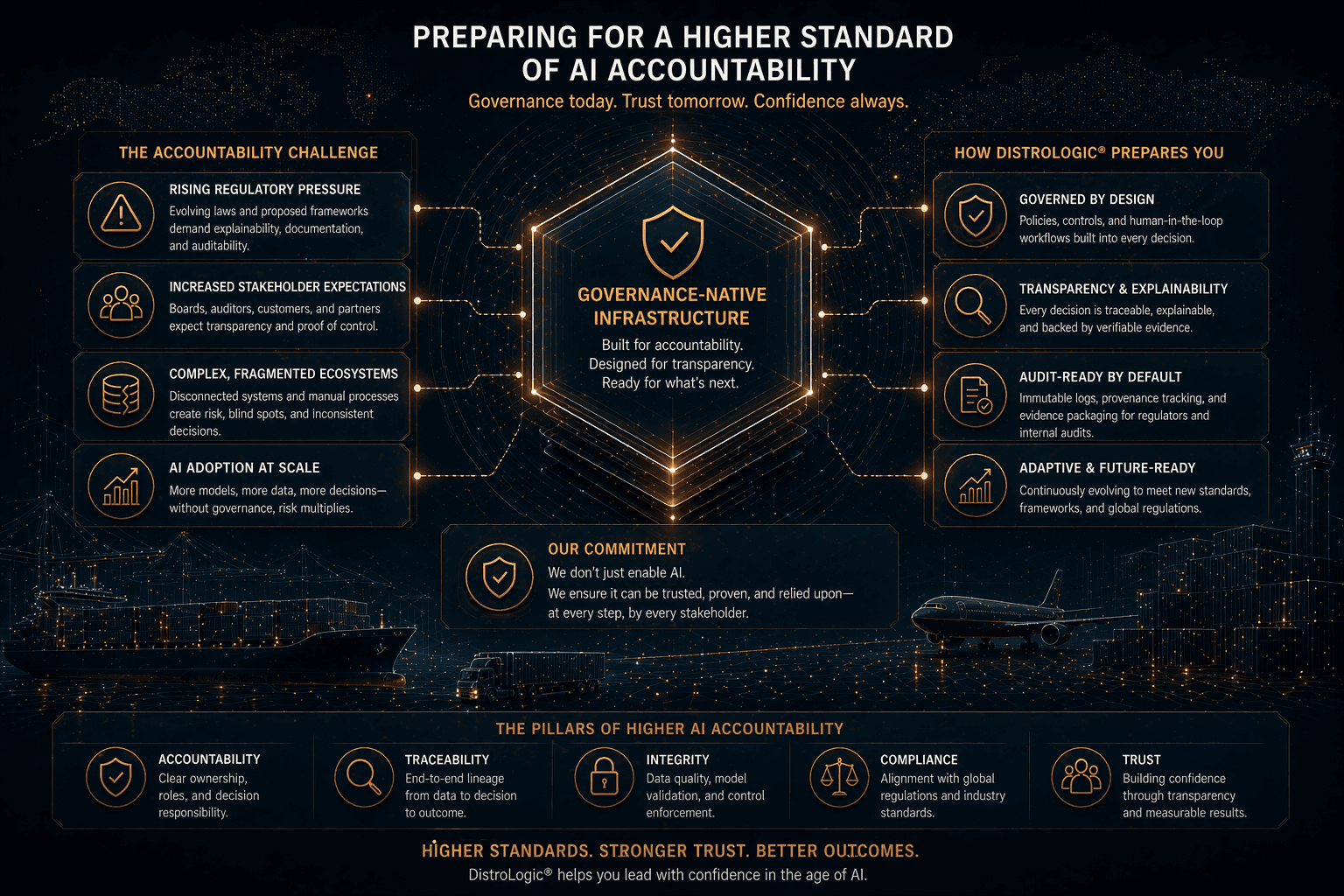
For enterprise operators, the takeaway is straightforward: AI adoption in trade and logistics can no longer be evaluated on speed or automation alone. It also needs to be evaluated on control, traceability, verification, and oversight. The organizations that prepare early will be better positioned to scale AI use in environments where accountability matters as much as efficiency.
As AI becomes more embedded in trade, logistics, and compliance workflows, the question is no longer whether enterprises will use it, but how they will govern it. The EU AI Act is accelerating that shift by raising expectations around accountability, oversight, and control in AI-enabled operational environments as the framework moves toward full applicability in August 2026. For companies operating across borders, the implications extend beyond legal review. They affect how systems are designed, how decisions are traced, and how execution is governed in practice.
AI governance is becoming an operational issue
In trade and logistics, AI is increasingly used to support classification, routing, exception handling, document processing, visibility, and decision support. In these environments, speed matters, but speed without control creates risk. Enterprises need confidence that AI-assisted workflows can be understood, constrained, reviewed, and verified when operational stakes are high.
Why this matters for trade and logistics teams
Cross-border and logistics operations already sit close to risk-sensitive functions: compliance, documentation, landed cost, shipment movement, fulfillment, partner coordination, and audit exposure. As scrutiny on AI governance increases, enterprises will need systems that do more than automate. They will need systems that support policy-aware execution, traceable decisions, audit-relevant records, and human oversight where it matters most.
What governance-native infrastructure looks like
Governance-native AI infrastructure is not defined by marketing claims. It is defined by operating characteristics. That includes the ability to apply rules and policies to workflows, preserve decision provenance, retain operational evidence, support review and intervention, and keep execution aligned with business and compliance boundaries.
Where DistroLogic® fits
DistroLogic® is built around governed execution in trade and logistics environments. Its architecture emphasizes policy-aware decisioning, audit-grade traceability, verification, and human-directed operational control across cross-border, fulfillment, and compliance workflows. Rather than treating governance as an afterthought, DistroLogic® is structured to support explainable, auditable, and operationally accountable execution from the start.
Preparing for a higher standard of AI accountability
For enterprise operators, the takeaway is straightforward: AI adoption in trade and logistics can no longer be evaluated on speed or automation alone. It also needs to be evaluated on control, traceability, verification, and oversight. The organizations that prepare early will be better positioned to scale AI use in environments where accountability matters as much as efficiency.