Architecture Overview
The Execution Architecture for Governed Global Trade
The Execution Architecture for Governed Global Trade
DistroLogic provides the execution architecture that turns trade intelligence, policy logic, and operational signals into traceable, governed action across enterprise environments.
DistroLogic provides the execution architecture that turns trade intelligence, policy logic, and operational signals into traceable, governed action across enterprise environments.
It connects intelligence to execution through a controlled architecture designed for compliance, auditability, and operational proof. Instead of relying on fragmented systems and manual handoffs, DistroLogic creates a more disciplined execution layer across jurisdictions, modes, and operating conditions.
It connects intelligence to execution through a controlled architecture designed for compliance, auditability, and operational proof. Instead of relying on fragmented systems and manual handoffs, DistroLogic creates a more disciplined execution layer across jurisdictions, modes, and operating conditions.
Why Governed Execution Required a New Architecture
Why Governed Execution Required a New Architecture
Global trade execution did not break because enterprises lacked systems. It broke because the systems in place were designed to manage isolated functions, not governed outcomes across the full chain of intelligence, policy, movement, and proof.
Classification logic lived in spreadsheets. Cost models lived in static engines. Compliance checks were reactive and jurisdiction-specific. Physical execution was distributed across disconnected carriers, partners, and manual workflows. As trade environments became more complex, those fractures became harder to control.
DistroLogic exists to govern global trade execution through more than integrations between fragmented tools. It provides an architecture layer that can normalize intelligence, enforce policy, coordinate movement, and preserve verifiable records as part of one continuous operational system.
Global trade execution did not break because enterprises lacked systems. It broke because the systems in place were designed to manage isolated functions, not governed outcomes across the full chain of intelligence, policy, movement, and proof.
Classification logic lived in spreadsheets. Cost models lived in static engines. Compliance checks were reactive and jurisdiction-specific. Physical execution was distributed across disconnected carriers, partners, and manual workflows. As trade environments became more complex, those fractures became harder to control.
DistroLogic exists to govern global trade execution through more than integrations between fragmented tools. It provides an architecture layer that can normalize intelligence, enforce policy, coordinate movement, and preserve verifiable records as part of one continuous operational system.
Legacy systems managed functions. DistroLogic governs execution.
Legacy systems managed functions. DistroLogic governs execution.
The Execution Layer Between Intelligence and Action
The Execution Layer Between Intelligence and Action
DistroLogic provides the execution layer that turns intelligence into governed operational action across trade, logistics, compliance, and multimodal execution environments.
Traditional systems can store records, calculate values, or route transactions, but they do not reliably govern how intelligence becomes movement. DistroLogic closes that gap by normalizing signals, applying policy, coordinating execution, and preserving proof as part of one continuous architecture.
This is what allows DistroLogic to move beyond disconnected integrations. Intelligence is not left upstream, and execution is not left unmanaged downstream. The platform connects them through a governed layer designed for traceability, compliance, and operational control.
Normalizes fragmented intelligence, policy, and execution signals
Applies governed logic across trade, cost, routing, and compliance conditions
Coordinates physical execution against structured policy and runtime controls
Produces traceable, reviewable, and auditable records as part of execution itself
DistroLogic provides the execution layer that turns intelligence into governed operational action across trade, logistics, compliance, and multimodal execution environments.
Traditional systems can store records, calculate values, or route transactions, but they do not reliably govern how intelligence becomes movement. DistroLogic closes that gap by normalizing signals, applying policy, coordinating execution, and preserving proof as part of one continuous architecture.
This is what allows DistroLogic to move beyond disconnected integrations. Intelligence is not left upstream, and execution is not left unmanaged downstream. The platform connects them through a governed layer designed for traceability, compliance, and operational control.
Normalizes fragmented intelligence, policy, and execution signals
Applies governed logic across trade, cost, routing, and compliance conditions
Coordinates physical execution against structured policy and runtime controls
Produces traceable, reviewable, and auditable records as part of execution itself
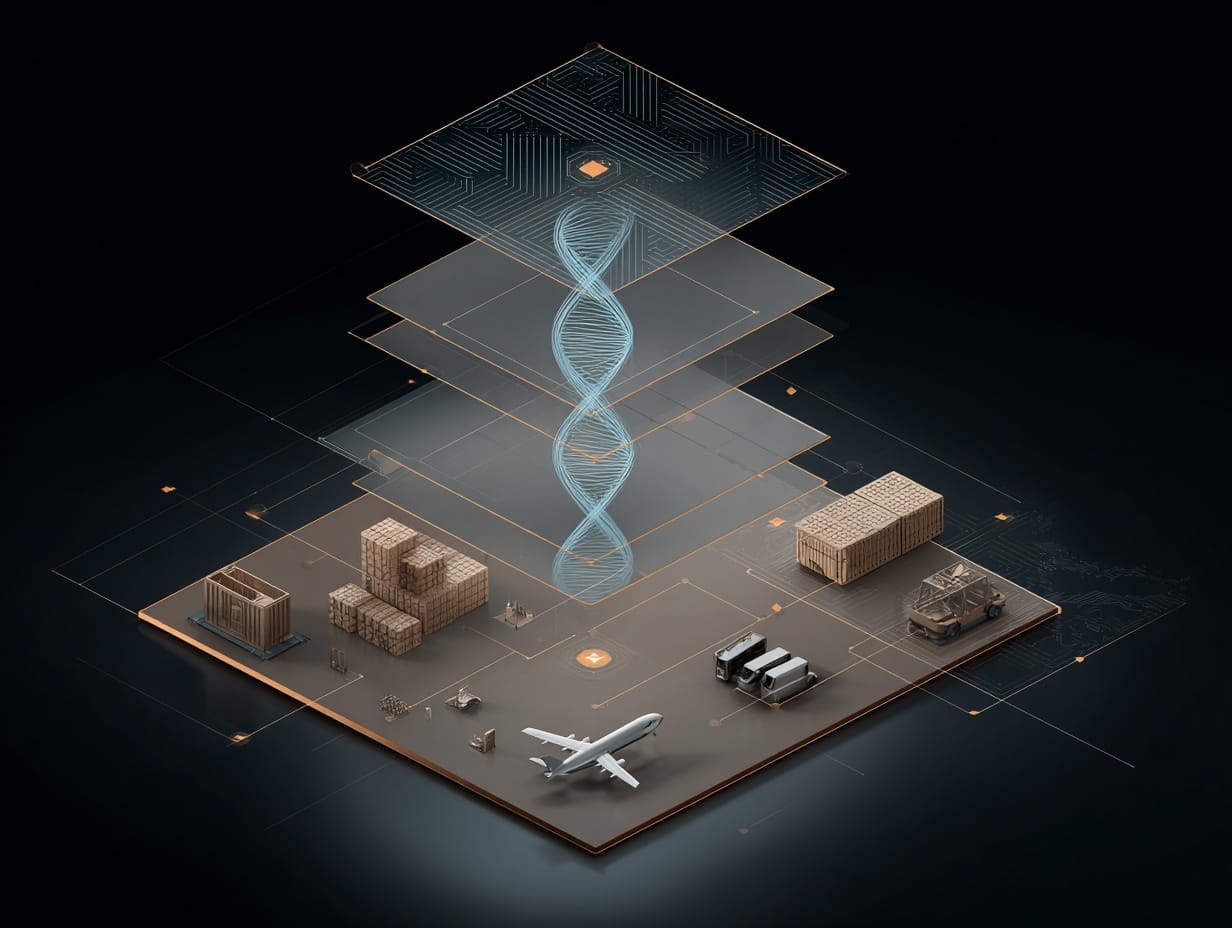
The result is operational intelligence linked to execution, with traceability by design.
How Governed Execution Moves from Intelligence to Action
How Governed Execution Moves from Intelligence to Action
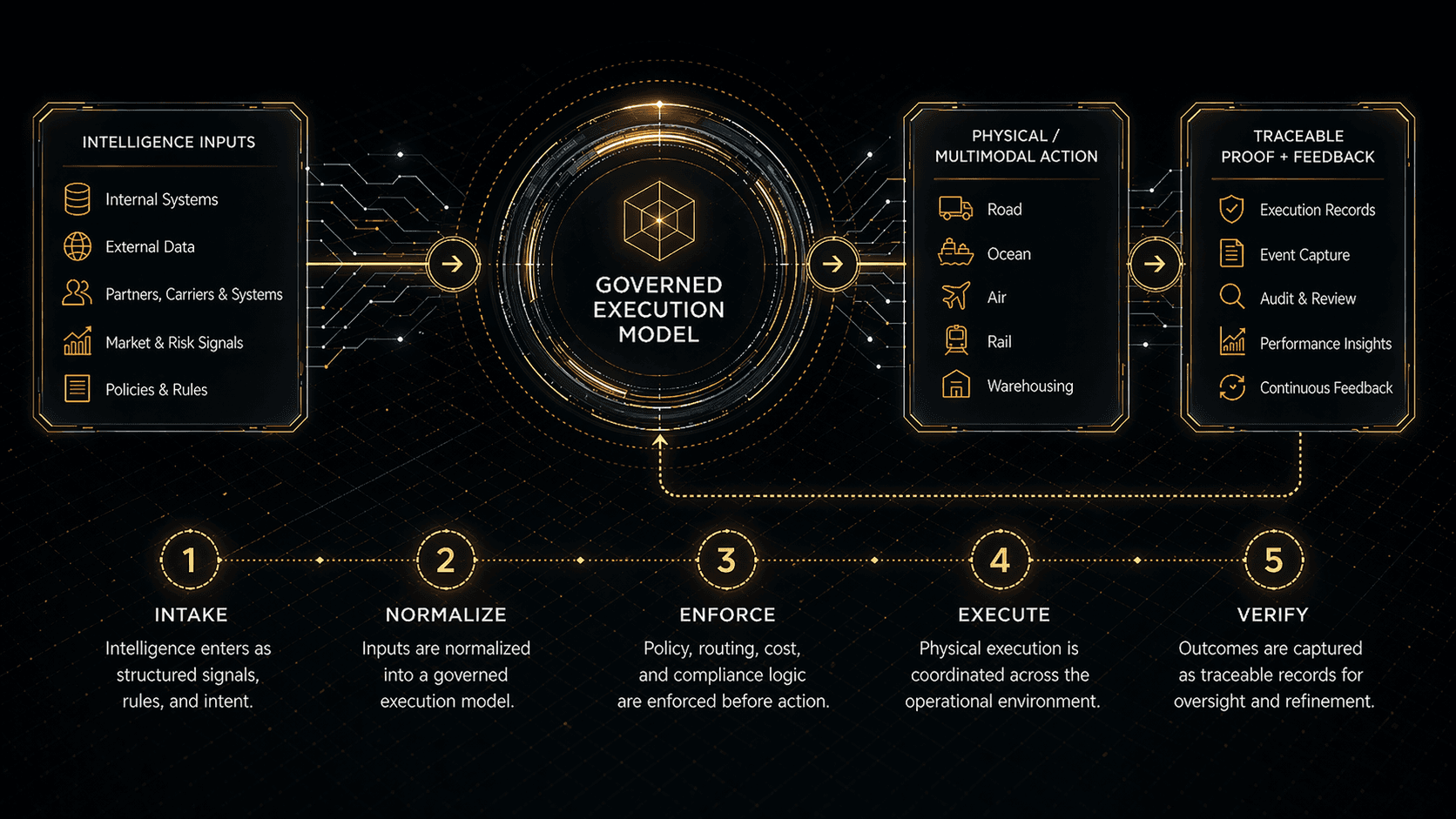
DistroLogic works by turning fragmented intelligence, policy conditions, and operational signals into a governed execution path. Instead of leaving analysis upstream and movement downstream, the architecture connects them through a controlled operating model.
The platform helps structure and normalize intent, then applies that intent through policy-aware execution logic, multimodal coordination, and controlled operational release. Every movement is tied to rules, every action is captured as part of the execution record, and every outcome can be reviewed in context.
This creates a system where intelligence is not separate from execution. It becomes part of a continuous architecture that can interpret, govern, act, and preserve proof across the same operational chain.
Intelligence enters the system as structured signals, rules, and intent.
DistroLogic normalizes those inputs into a governed execution model.
Policy, routing, cost, and compliance logic are enforced before action.
Physical execution is coordinated across the relevant operational environment.
Outcomes are captured as traceable records that support oversight and future refinement.
DistroLogic works by turning fragmented intelligence, policy conditions, and operational signals into a governed execution path. Instead of leaving analysis upstream and movement downstream, the architecture connects them through a controlled operating model.
The platform helps structure and normalize intent, then applies that intent through policy-aware execution logic, multimodal coordination, and controlled operational release. Every movement is tied to rules, every action is captured as part of the execution record, and every outcome can be reviewed in context.
This creates a system where intelligence is not separate from execution. It becomes part of a continuous architecture that can interpret, govern, act, and preserve proof across the same operational chain.
Intelligence enters the system as structured signals, rules, and intent.
DistroLogic normalizes those inputs into a governed execution model.
Policy, routing, cost, and compliance logic are enforced before action.
Physical execution is coordinated across the relevant operational environment.
Outcomes are captured as traceable records that support oversight and future refinement.
Execution becomes governed when intelligence, policy, action, and proof operate inside one architecture.
Proof, Governance, and Trust Built into Execution
Proof, Governance, and Trust Built into Execution
DistroLogic is not just an execution model. It is an architecture designed to preserve proof, enforce governance, and maintain operational trust as execution occurs.
Every governed action produces a traceable record. Policy logic, routing conditions, compliance controls, and execution outcomes are captured as part of the operational chain rather than reconstructed after the fact. That allows enterprises to review what happened, understand why it happened, and defend those outcomes across internal, partner, and regulatory contexts.
This is what makes the architecture usable at scale. Governance is not bolted on after movement. It is embedded into the way movement is authorized, coordinated, and verified.
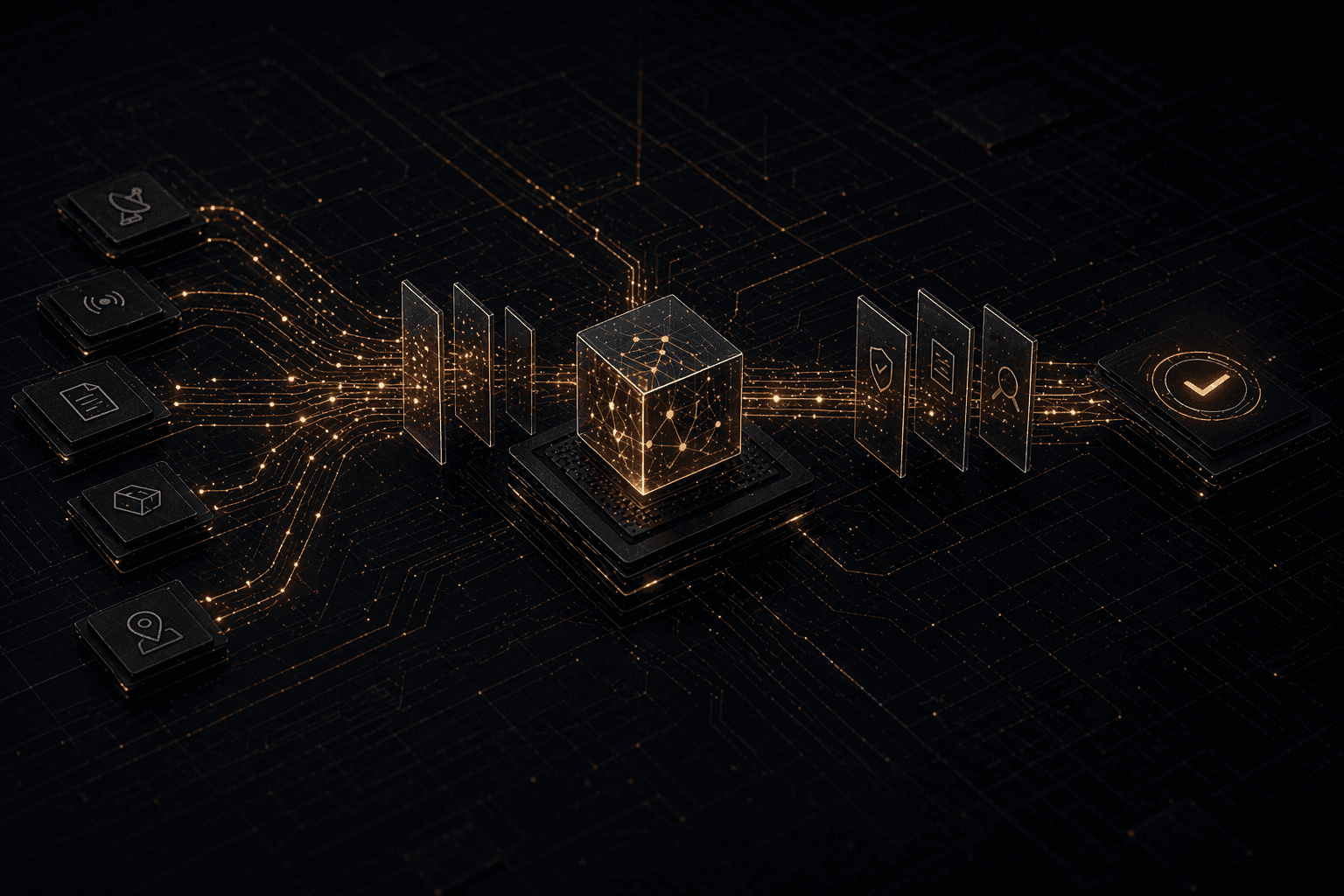
Traceable records are created as part of execution itself
Policy and compliance controls are enforced before and during action
Auditability is preserved without relying on manual reconstruction
Operational trust increases because visibility and proof are built into the system design
DistroLogic is not just an execution model. It is an architecture designed to preserve proof, enforce governance, and maintain operational trust as execution occurs.
Every governed action produces a traceable record. Policy logic, routing conditions, compliance controls, and execution outcomes are captured as part of the operational chain rather than reconstructed after the fact. That allows enterprises to review what happened, understand why it happened, and defend those outcomes across internal, partner, and regulatory contexts.
This is what makes the architecture usable at scale. Governance is not bolted on after movement. It is embedded into the way movement is authorized, coordinated, and verified.
Traceable records are created as part of execution itself
Policy and compliance controls are enforced before and during action
Auditability is preserved without relying on manual reconstruction
Operational trust increases because visibility and proof are built into the system design
Trust becomes durable when proof is produced by the architecture, not assembled afterward.
Trust becomes durable when proof is produced by the architecture, not assembled afterward.
Governance and Trust Fabric
Governance and Trust Fabric
Designed for Governed, Auditable Execution
Designed for Governed, Auditable Execution
DistroLogic’s architecture is designed to support intelligence-led operations without separating automation from accountability. From signal ingestion and assessment through decisioning, verification, and execution, the system is structured to preserve traceability, apply policy-aware controls, and support human oversight where it matters most.
DistroLogic’s architecture is designed to support intelligence-led operations without separating automation from accountability. From signal ingestion and assessment through decisioning, verification, and execution, the system is structured to preserve traceability, apply policy-aware controls, and support human oversight where it matters most.
Signal-to-Decision Traceability
Signal-to-Decision Traceability
Automation runs within explicit business, operational, and compliance constraints.
Policy-Aware Control Layers
Policy-Aware Control Layers
Actions and recommendations can be linked back to governing logic, inputs, and context.

Verification Across the Loop
Verification Across the Loop
Workflows preserve audit-relevant records beyond basic shipment or status visibility.

Human Oversight Points
Human Oversight Points
Sensitive workflows can include review, intervention, and approval at the right control points.
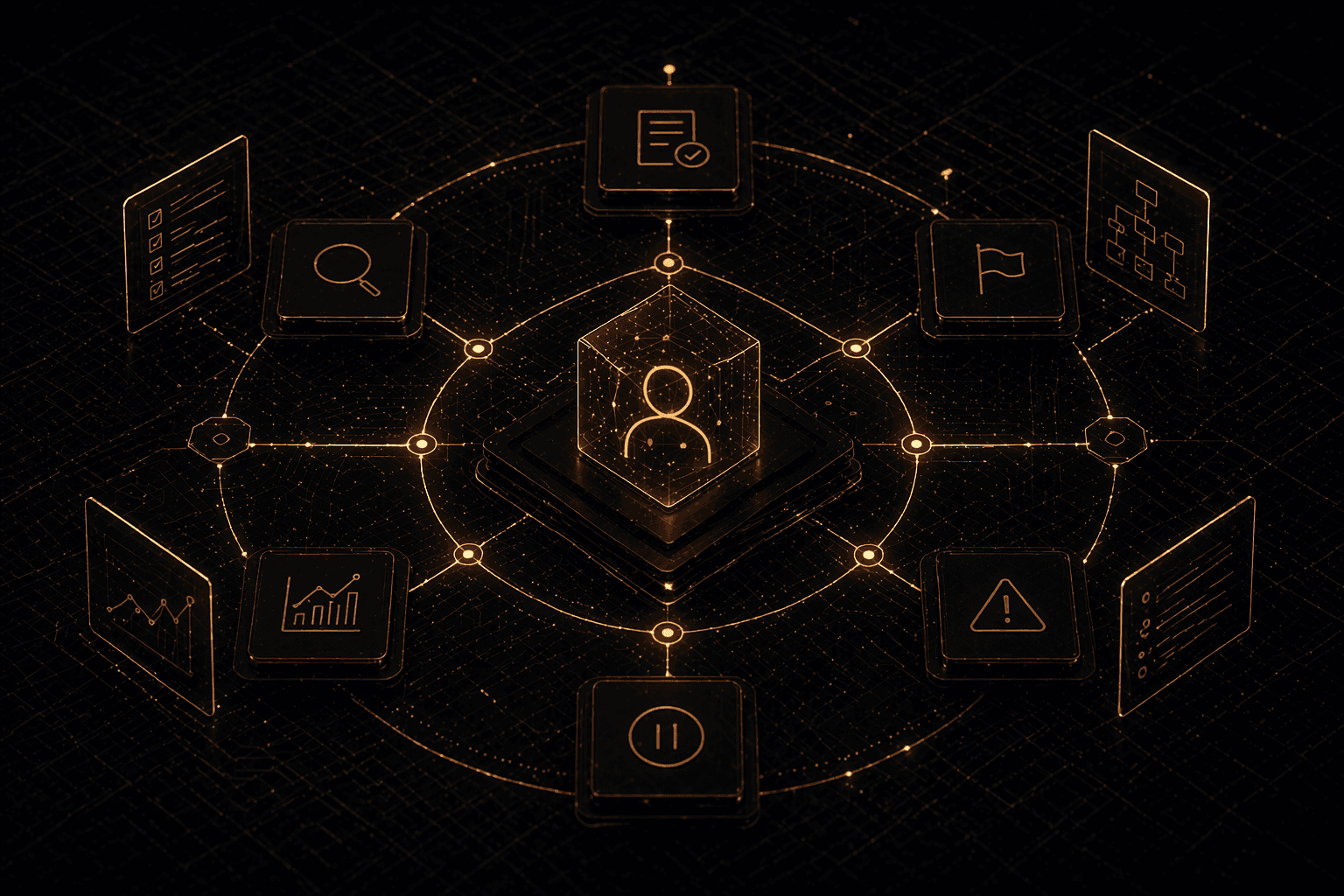
This creates a stronger architectural foundation for AI-enabled trade and logistics operations in environments where trust, control, and accountability matter.
This creates a stronger architectural foundation for AI-enabled trade and logistics operations in environments where trust, control, and accountability matter.
Review the Architecture in Context
Request an architecture preview to see how DistroLogic connects intelligence, policy, execution, and proof across governed trade and logistics environments.