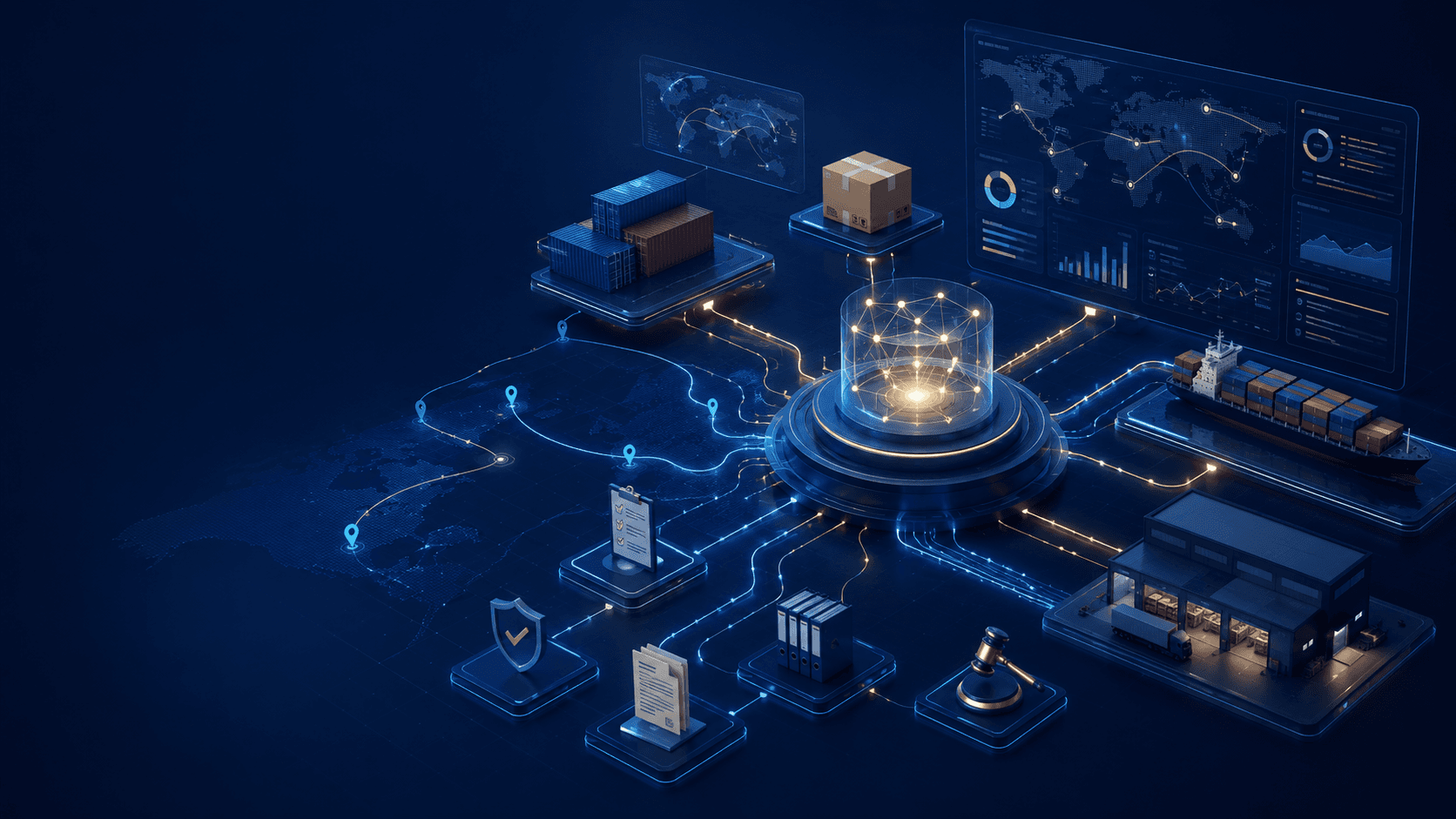
Governed Execution Infrastructure for Enterprise Logistics
Enterprise logistics no longer fails because companies lack systems. Most operators already have an ERP, WMS, TMS, carrier portals, broker records, spreadsheets, and internal reporting workflows. The harder problem is that those systems rarely produce one defensible answer when cost, compliance, shipment status, documentation, and operational risk have to be evaluated together.
DistroLogic® was built for that gap.
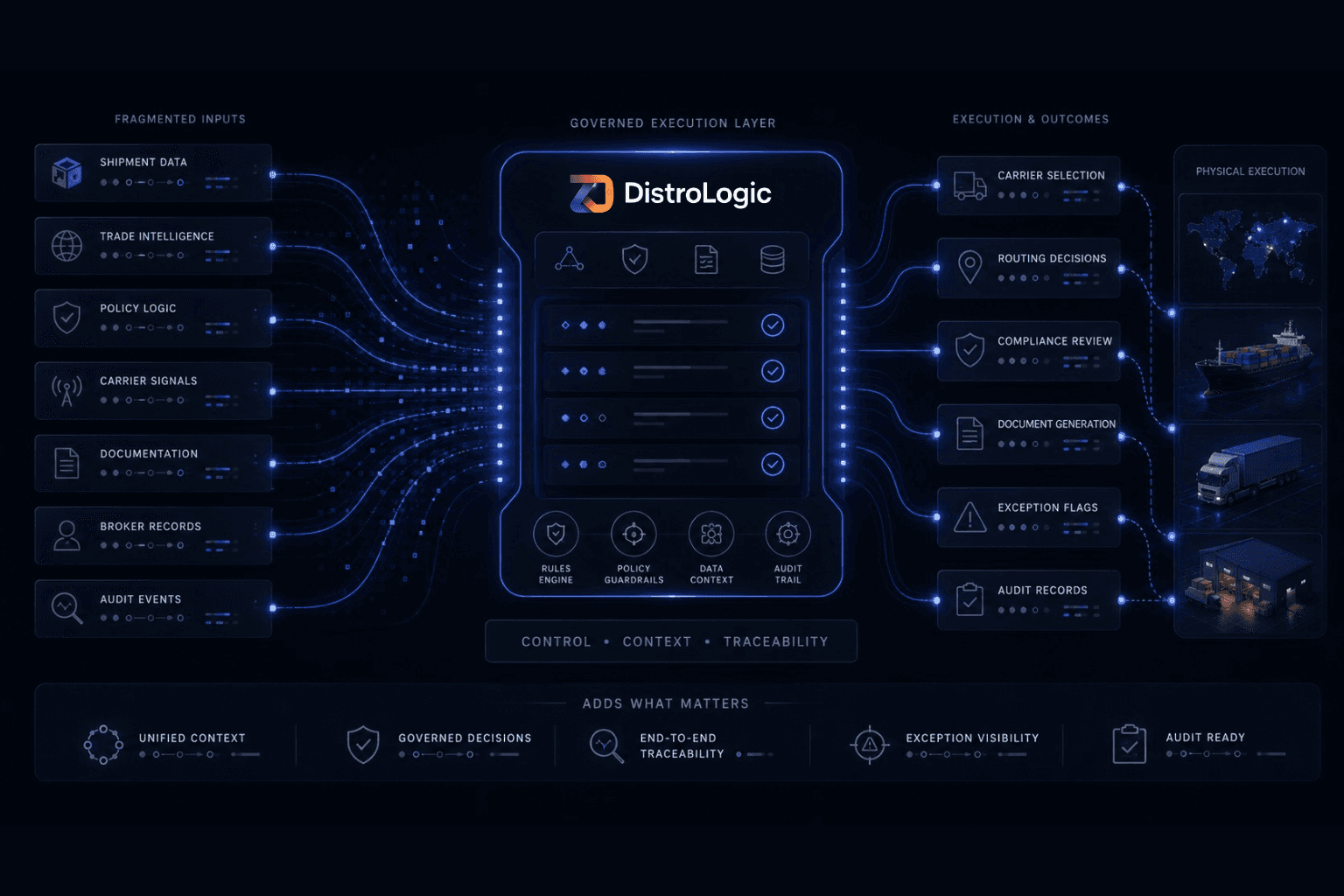
The platform operates between enterprise systems and physical logistics execution. It helps teams turn shipment data, trade intelligence, policy logic, carrier signals, documentation, and audit events into traceable operational decisions. The goal is not just automation. The goal is governed execution: decisions that can be reviewed, explained, corrected, and verified after the fact.
Why enterprise logistics needs governed execution
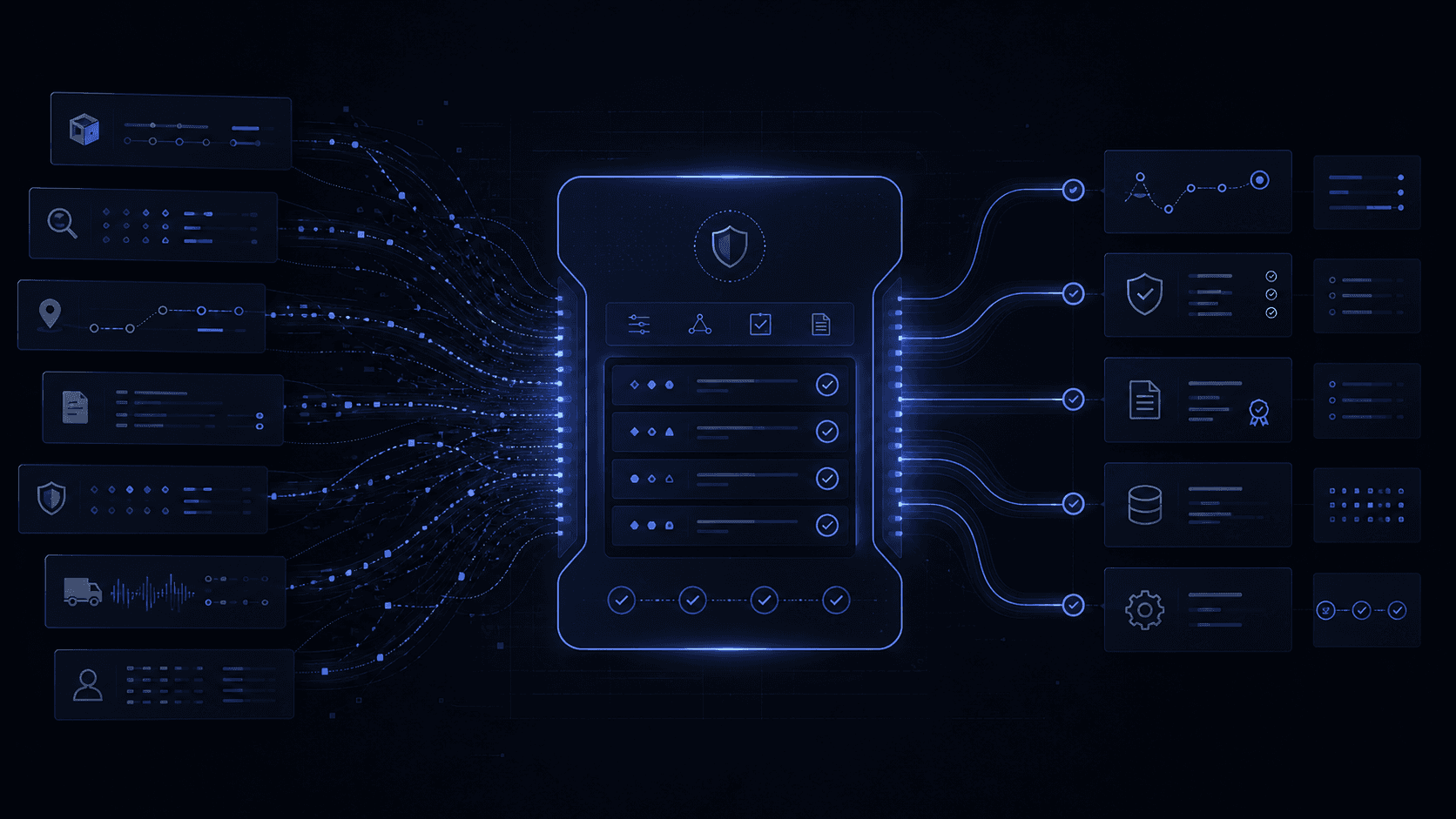
Modern logistics teams work across fragmented systems. A shipment may begin in an ERP, move through a warehouse system, receive label and rate data from a carrier, depend on broker documentation, and generate customer-facing tracking events from multiple sources. Each system may be useful on its own, but the operational decision often happens between them.
That decision may sound simple:
Which carrier should move this shipment?
Which route should be selected?
Which classification should apply?
Which document should be generated?
Which exception requires review?
Which record proves the decision was compliant?
In practice, each of those answers depends on multiple signals. Cost, timing, classification, policy, carrier history, documentation quality, trust level, and audit requirements all influence the final action. When those signals live in separate systems, teams are forced to make decisions through manual review, institutional memory, and disconnected dashboards.
That creates risk. Not because operators are careless, but because the operating environment is too fragmented for clean decision-making.
What DistroLogic adds
DistroLogic provides a governed execution layer for enterprise logistics. It does not replace the systems companies already use. It sits across them, receives operational signals, applies policy and trade logic, and produces actions that carry context.
Those actions may include a carrier selection, shipment status update, compliance review, rate decision, document output, exception flag, or audit record. Each action is tied to the inputs and logic that shaped it.
This matters because enterprise teams do not only need speed. They need proof.
A shipment may move quickly and still create downstream issues if the classification is wrong, the carrier path is poorly matched, the documentation is incomplete, or the reason for the decision cannot be reconstructed later. DistroLogic is designed to help teams move with control rather than relying on disconnected execution steps.
From data fragments to operational decisions
Every logistics organization has data. The challenge is turning that data into operational decisions that can be trusted.
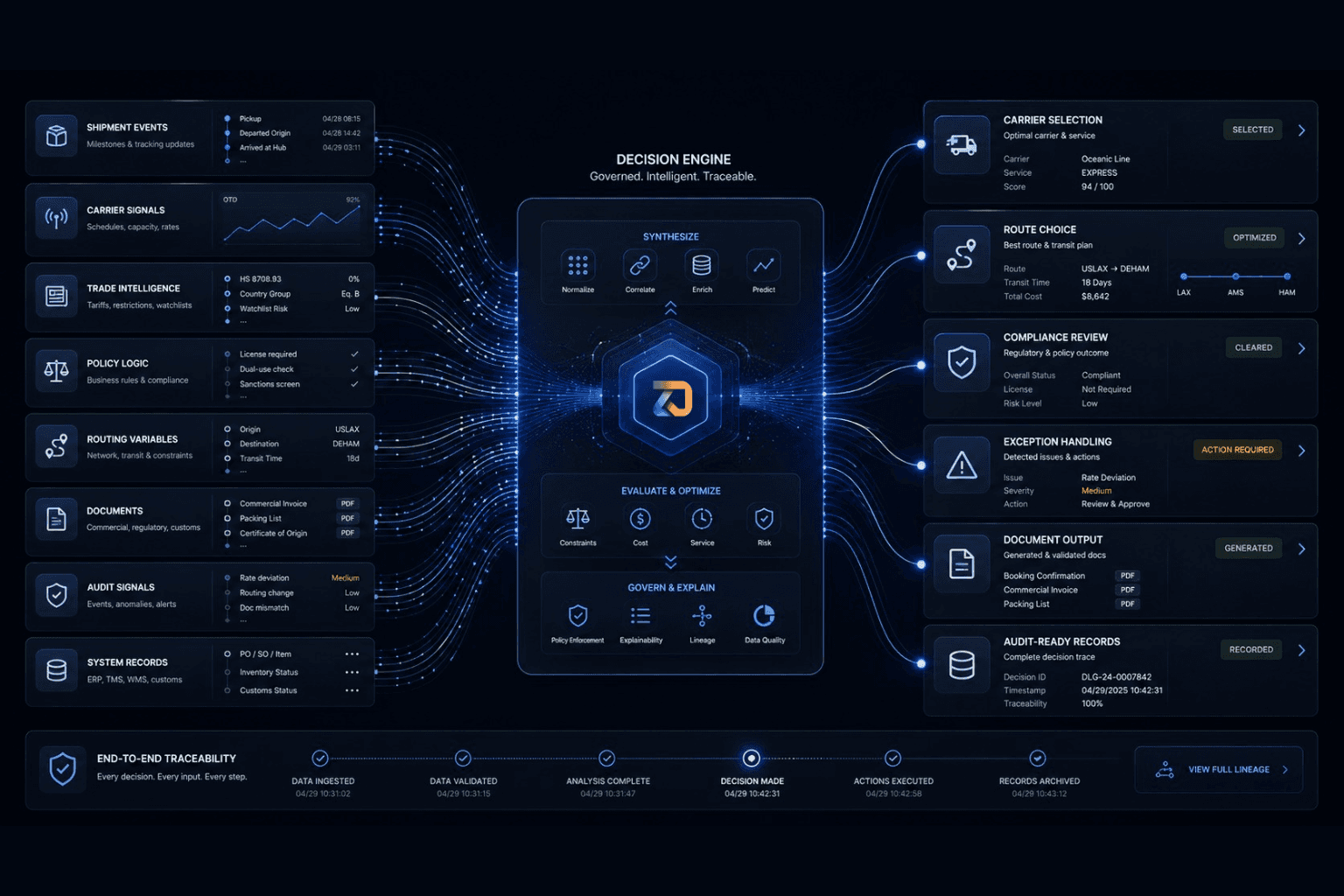
DistroLogic connects several categories of logistics intelligence:
Shipment intelligence gives teams a clearer picture of shipment state, carrier activity, tracking events, and exceptions.
Trade intelligence supports classification, tariff logic, landed cost analysis, compliance checks, and duty exposure review.
Telemetry and audit signals help preserve the evidence behind shipment movement, carrier updates, document generation, and exception handling.
Decision and policy logic allows teams to apply business rules rather than relying on ad hoc judgment for every shipment.
Rate and route optimization helps evaluate carrier cost, transit time, reliability, and service-level requirements.
Document and identity systems help connect shipment records, generated documents, QR-linked tracking, and audit-ready proof.
The value is not in treating these as isolated features. The value is in how they work together. A carrier decision can be influenced by cost, trust, compliance requirements, service level, and prior performance. A trade decision can affect documentation, landed cost, routing, and audit posture. A shipment exception can trigger review, preserve evidence, and update downstream records.
That is governed execution in practice.
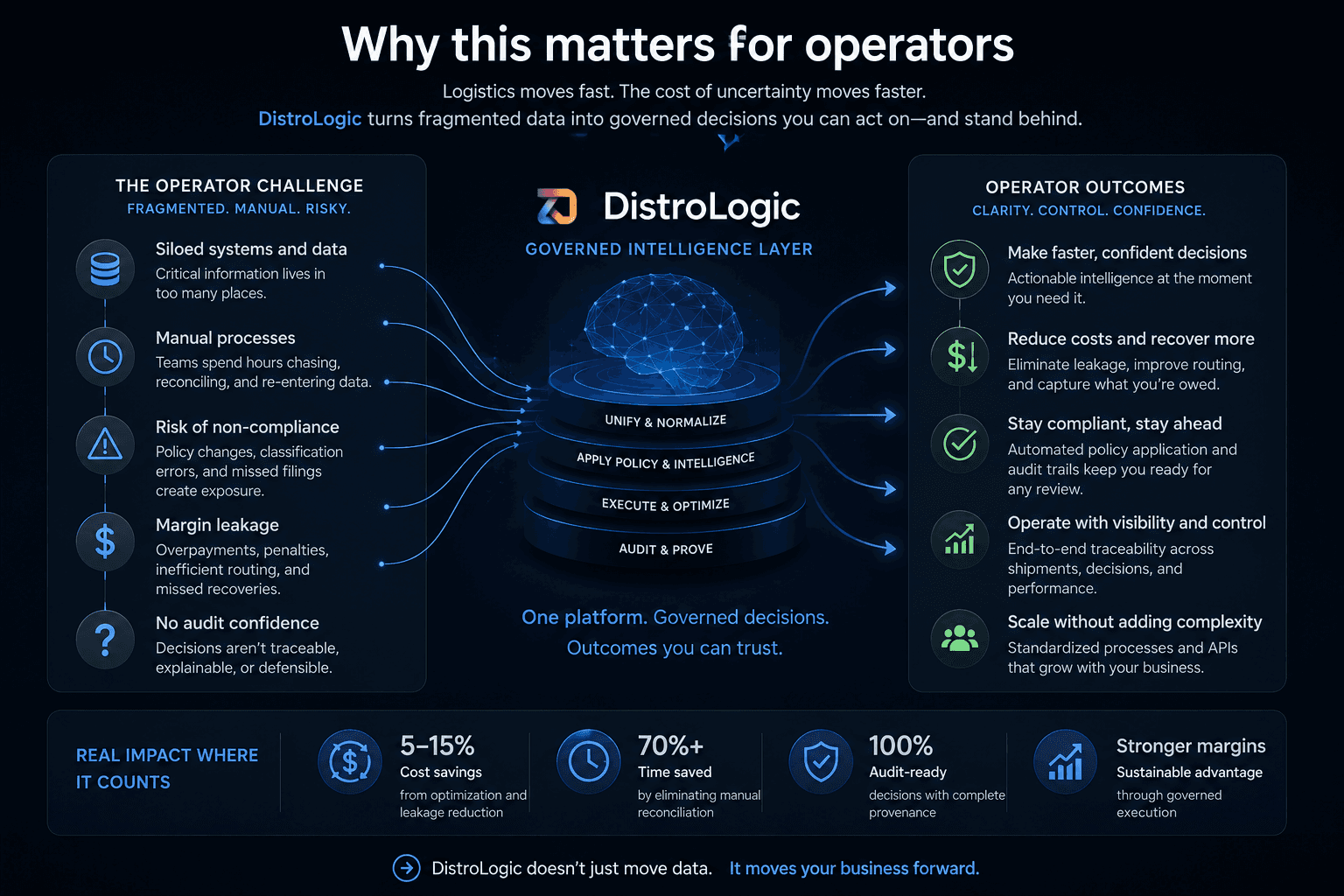
Why this matters for operators
Enterprise operators are under pressure from every direction. Costs are rising. Tariff rules shift. Carrier performance varies by lane and season. Customers expect visibility. Regulators expect records. Finance teams expect cost control. Leadership expects decisions to be explainable.
Traditional logistics software often focuses on execution speed or visibility alone. Those are necessary, but they are not enough.
A company may know where a shipment is and still not know whether the decision behind it was compliant. It may generate a label and still not know whether the selected carrier was the right choice. It may have a customs record and still not know whether the classification was reviewed against current trade conditions. It may have tracking data and still not have a usable audit trail.
DistroLogic is built around the idea that logistics execution should be measurable, governed, and reviewable.
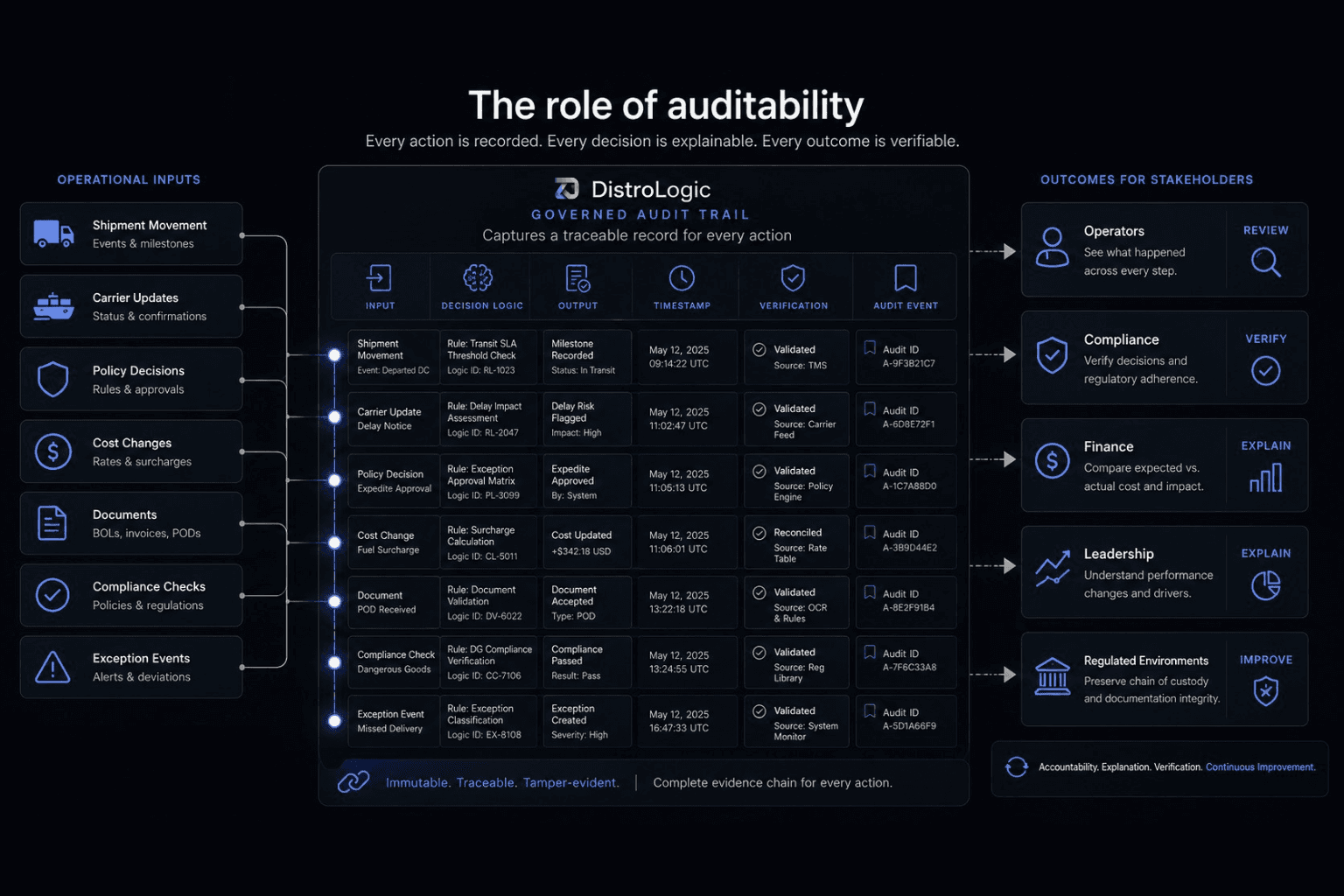
The role of auditability
Auditability is not just a compliance function. It is an operating advantage.
When every action carries a record of the input, decision logic, and resulting output, teams can improve over time. They can identify why cost changed, why an exception occurred, why a carrier was selected, why a document was generated, or why a shipment required review.
That record also supports accountability. Operators can act quickly without losing the ability to explain what happened later. Compliance teams can review decisions without reconstructing them from disconnected systems. Finance teams can compare expected and actual costs with better context. Leadership can understand whether the logistics network is improving or simply reacting.
For regulated industries, this becomes even more important. Chain-of-custody requirements, documentation controls, shipment integrity, and exception handling all depend on a reliable operating record. DistroLogic helps preserve that record across shipment movement, policy decisions, documents, and audit events.
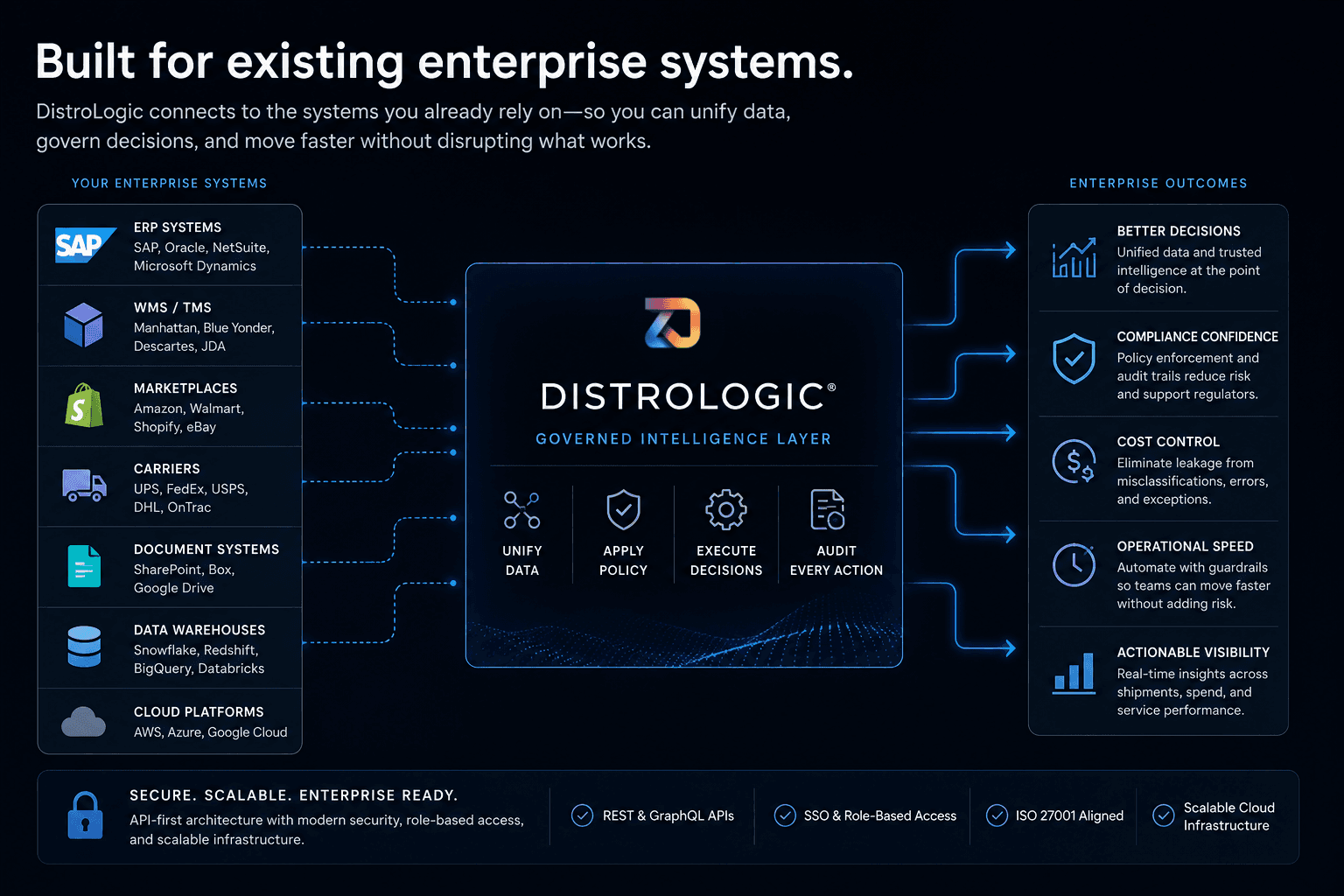
Built for existing enterprise systems
DistroLogic is not a replacement for ERP, WMS, TMS, carrier, broker, or marketplace systems. Those systems still manage important functions. The problem is that none of them alone governs the full decision path across trade, shipment, carrier, document, and audit logic.
DistroLogic sits between those systems and helps coordinate the decisions that happen across them.
It can ingest data from enterprise planning systems, marketplaces, warehouse workflows, carrier APIs, broker records, and operational files. It can then apply policy logic, trade intelligence, routing rules, trust signals, and documentation requirements before producing traceable output.
That output can support operations teams, compliance leaders, finance stakeholders, technical evaluators, and executive decision-makers.
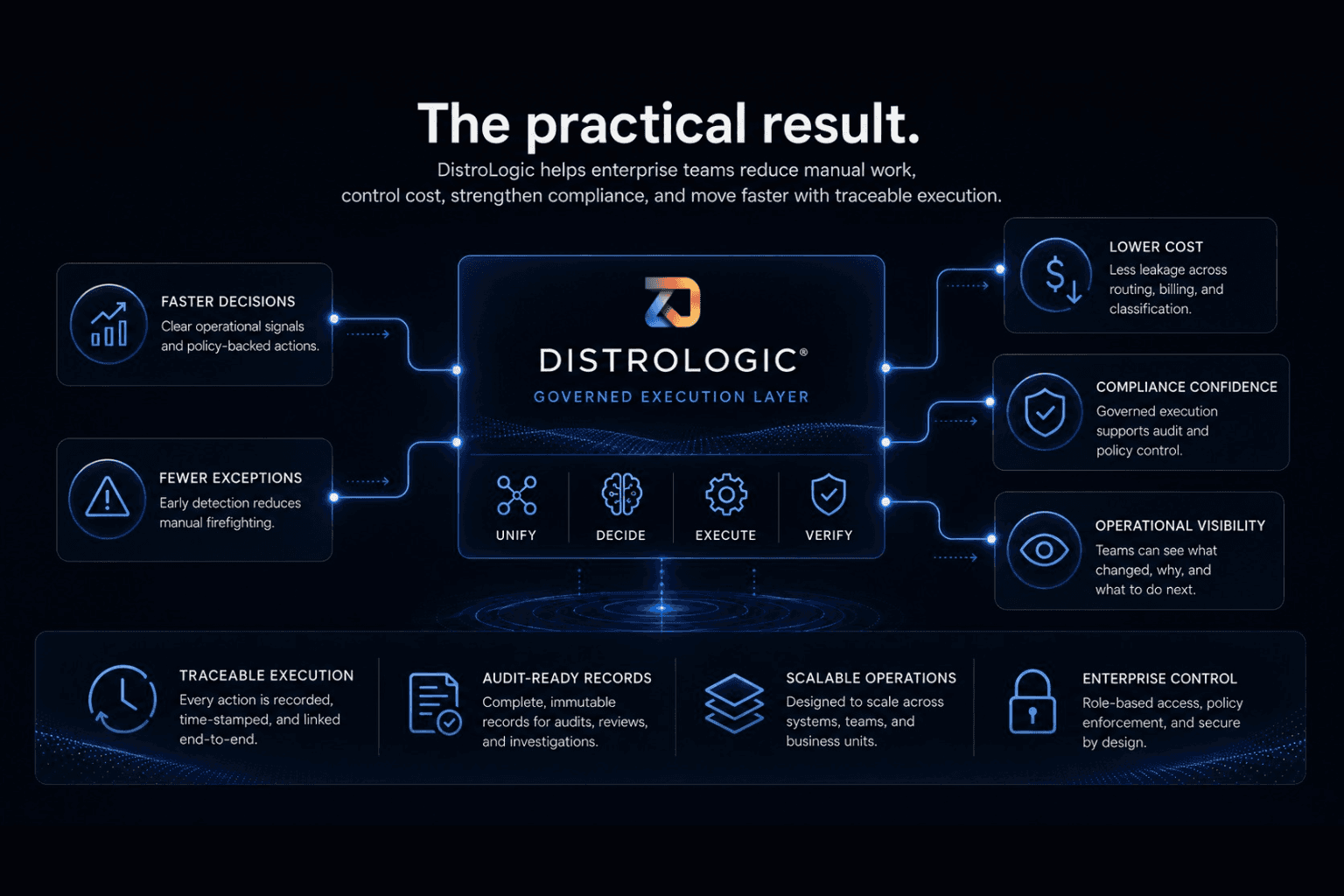
The practical result
The practical result is a logistics environment where enterprise teams can answer five questions more clearly:
What moved?
What did it cost?
Why was that carrier, route, classification, document, or exception path selected?
Was the decision aligned with policy and compliance requirements?
Can the result be verified later?
DistroLogic is designed to make those answers easier to produce. Not as a report assembled after the fact, but as part of the operating flow itself.
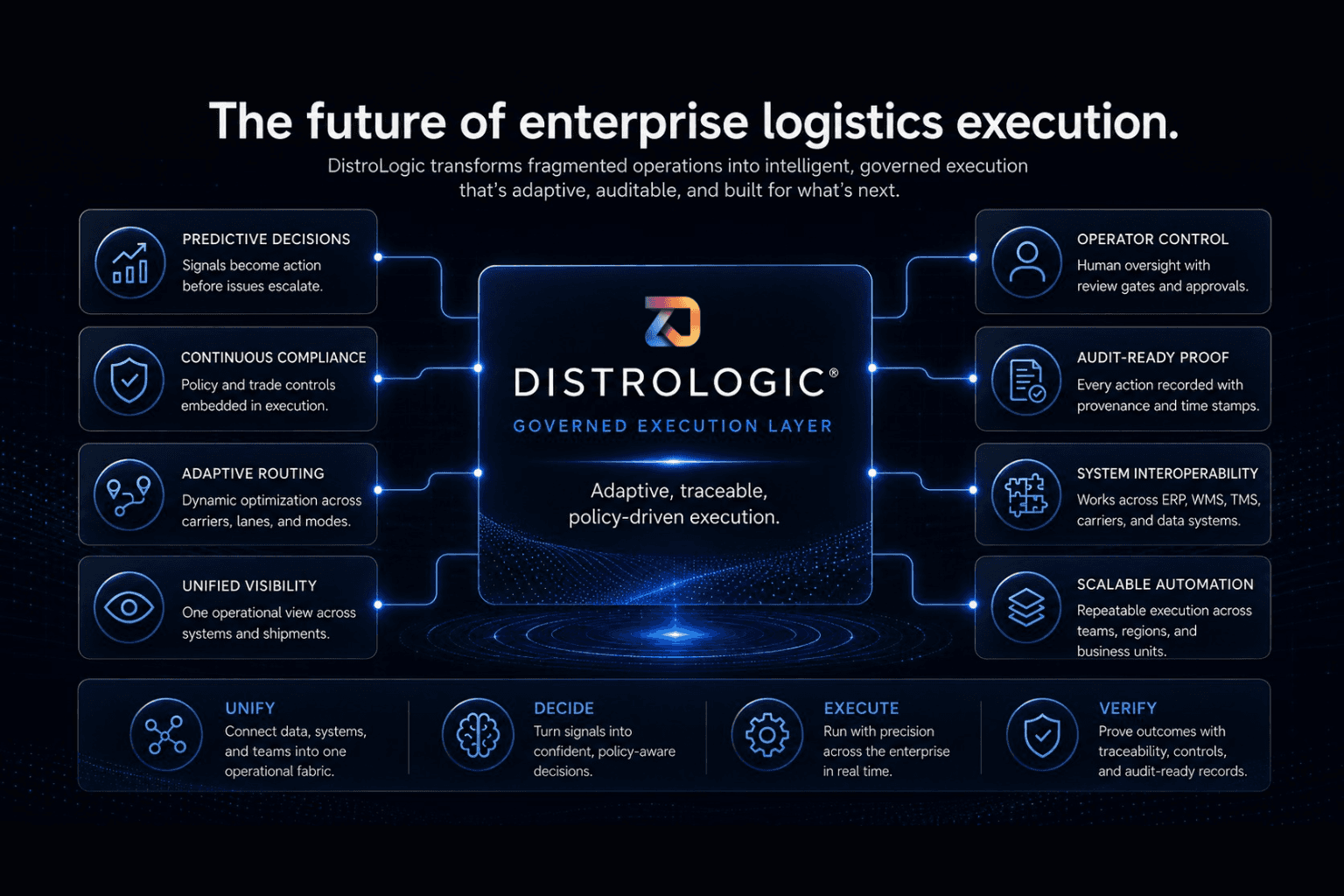
The future of enterprise logistics execution
Enterprise logistics is moving toward systems that do more than connect workflows. The next generation of logistics infrastructure must help teams govern decisions, preserve proof, and adapt to changing trade and operational conditions.
That requires a different kind of platform. One that does not treat shipment visibility, rate optimization, trade intelligence, documentation, and auditability as separate concerns.
DistroLogic brings those concerns into one governed execution environment.
For companies operating across complex logistics networks, the advantage is simple: faster decisions, clearer proof, stronger control, and fewer gaps between what systems record and what operators actually need to know.